Live·Product·2026
Vishakha IT Asset Manager
Every laptop, warranty and department change in one system.
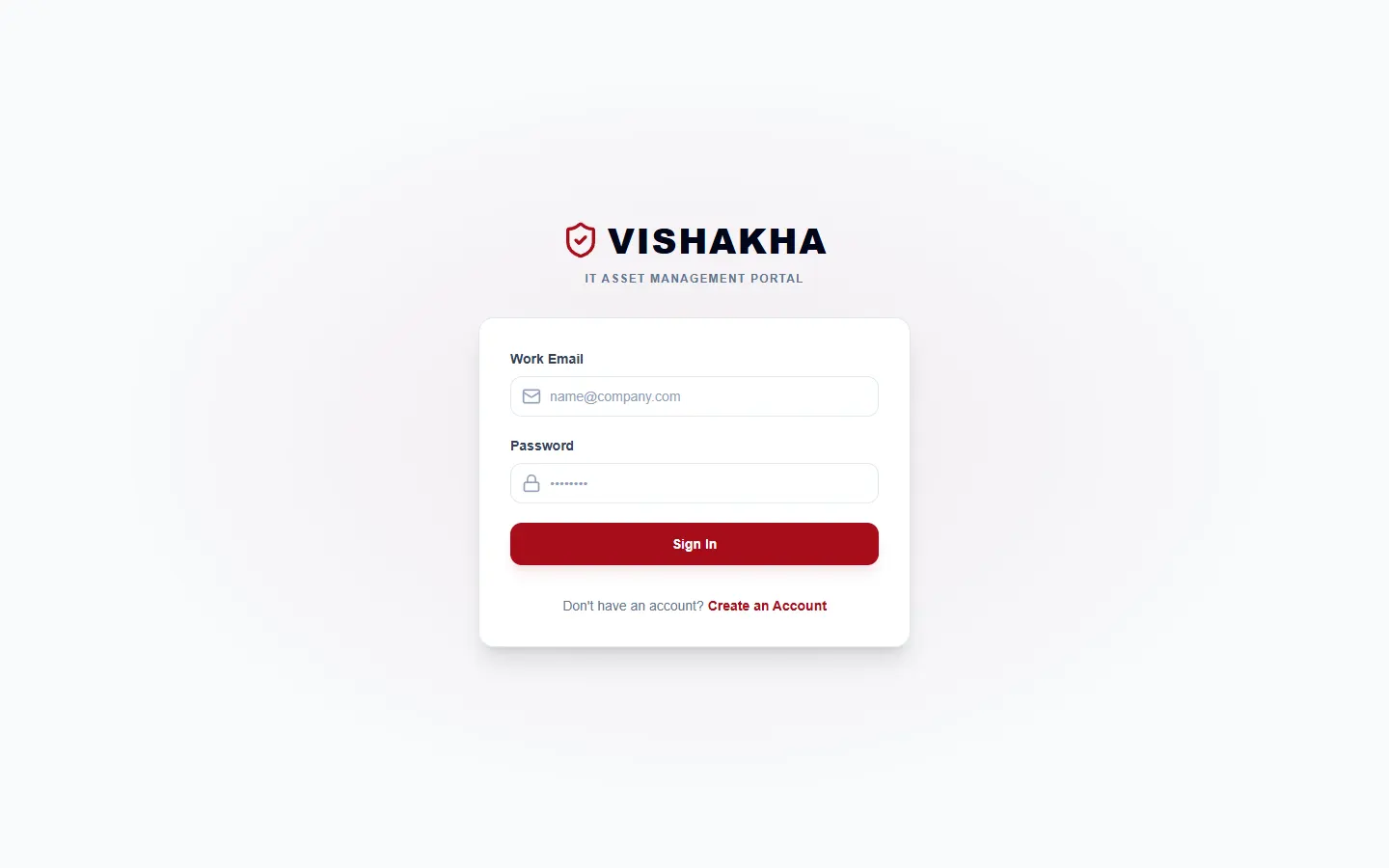
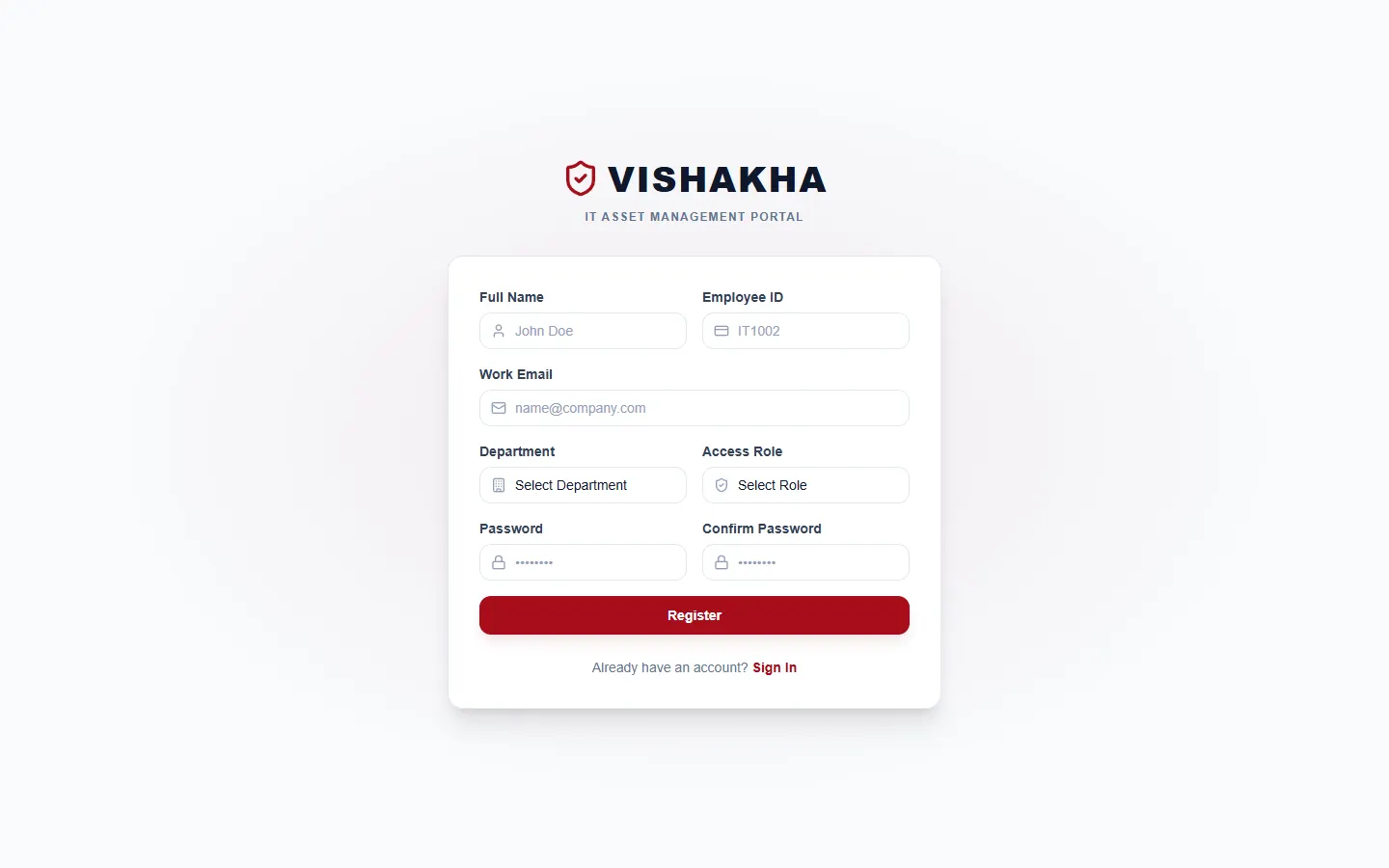
The demo opens at the sign in screen, where an employee or admin account can be registered.
- Role
- Built during a 30 day IT internship
- Year
- 2026
- Type
- Product
- Stack
- Next.js, TypeScript, MongoDB
The problem
Hardware records across departments were spread between spreadsheets and memory. Purchase cost, vendor, warranty and condition were recorded once and rarely updated, so nobody could answer which laptop sat with whom or whether its warranty still covered repairs.
What I built
An enterprise asset portal that tracks hardware through its lifecycle, from purchase cost and vendor to warranty, condition and department assignment, with JWT role access for admins and employees.
Inside the build
- Hardware records with purchase cost, vendor and warranty
- Condition and department assignment tracking
- JWT authentication with admin and employee roles
- Audit summaries across the asset register
- Next.js and TypeScript interface on a MongoDB data layer
What was hard
Two roles, one register
Employees need their own assigned assets; admins need the full picture. Access rules live in the API, not just in hidden buttons, so a copied request cannot reach admin data.
History, not just current state
An asset record is only useful if a reassignment leaves a trail. Department changes append to the record instead of overwriting the previous holder.
Screens
Stack
- Next.js
- TypeScript
- MongoDB
- JWT
Where it landed
Built and shipped during a 30 day internship at Vishakha Polyfab. Live demo at vishakha-asset-management.vercel.app, source on GitHub.